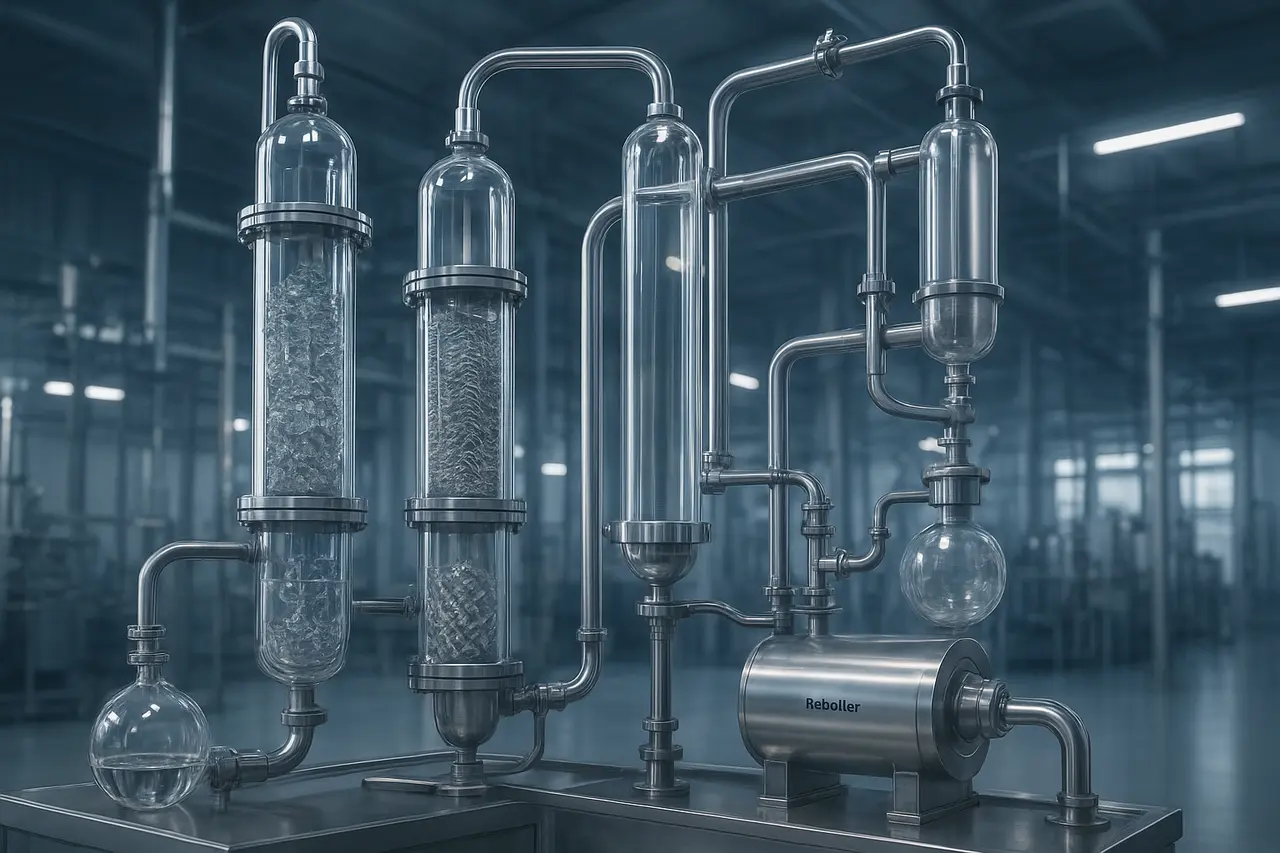
When people in the chemical or pharmaceutical trade talk about fractional distillation units, reliability is the word that usually follows. A column that runs for years without cracking, leaking, or losing efficiency isn’t just hardware, it’s the backbone of a process line. This is where Swastik Industries India has made its reputation, quietly supplying labs and plants with fractionating column systems that hold up under pressure.
Table of Contents
Why Fractionating Columns Matter
At its simplest, a fractionating column is a vertical assembly where vapor and liquid meet again and again until the separation is sharp enough to be useful. It could be ethanol-water separation, solvent recovery in a pharma plant, or essential oil purification for specialty chemicals.
People often ask: “Isn’t a distillation column just a pipe with packing?”
Not really. The performance depends on design decisions, height, diameter, packing type, reboiler integration, even the joint quality if it’s glass. A small miscalculation here can mean 20% less throughput or poor purity levels.
That’s why companies don’t just want equipment. They want confidence that their distillation column components, flanges, condensers, packing supports, have been thought through and tested.
What Swastik Brings to the Table
The Swastik company doesn’t sell catalog pieces and walk away. Their approach is modular, built on borosilicate glass units that can be adapted and scaled. Glass isn’t just for visibility, it gives chemical resistance across a wide range of acids and solvents where metals corrode or introduce contamination.
One pharmaceutical client, for instance, needed a reaction distillation unit that could handle corrosive intermediates. Stainless steel wouldn’t last, and exotic alloys were too expensive. Swastik’s borosilicate setup allowed them to combine reaction and separation in a single line, avoiding two separate vessels and cutting cleaning downtime by almost 40%.
Structured vs. Random Packing, Real Trade-offs
A common question during discussions is: “Should we go with structured packing or random?”
- Random packing, Raschig rings, glass saddles, works fine for general separations. It’s cheaper, flexible, easy to replace.
- Structured packing, on the other hand, offers higher efficiency per meter of column. It means shorter columns for the same separation duty, lower pressure drop, and better throughput.
Swastik doesn’t push one over the other. They look at the boiling points, expected impurities, and scale. For a solvent recovery unit running continuously, structured is often justified. For lab-scale pilot trials, random keeps costs in check. That kind of judgment, born from hundreds of installed columns, saves clients from overspending or under-designing.
Modular Design That Grows With You
Most people underestimate how much process requirements change. A pilot plant might need a one-meter fractionating column today, but if the product scales, that setup should ideally expand rather than sit idle. Swastik’s modular glass design lets plants add sections, swap packing types, or integrate additional condensers without scrapping the base system.
This is particularly valuable for chemical R&D houses where recipes change every six months. Instead of buying new columns each time, they adapt the existing one.
Reliability in the Real World
Equipment is tested not in brochures but on the shop floor. Anyone who’s run a distillation batch knows the frustration of a leaking joint mid-process. Swastik’s attention to grinding tolerances and flange assemblies is what keeps these issues minimal.
A plant engineer in Gujarat once shared how, during an upgrade, the team feared downtime. Swastik engineers suggested a hybrid packing and flange modification that allowed the system to keep running during installation. That single design tweak saved the plant almost two weeks of halted production.
Addressing Customer Concerns
Clients often come with very human worries:
- “Will it handle our solvents without corrosion?”
- “Can my team clean and reassemble it without specialists?”
- “If something breaks, how long before I get spares?”
Swastik answers these upfront. They design for chemical resistance, easy disassembly, and maintain stock spares. It’s not flashy, but it’s what operators on the ground value most.
The Bigger Picture, Reaction + Separation
Modern plants are moving toward integration. Instead of one reactor, then transferring to a distillation unit, many prefer a reaction distillation unit. This reduces handling losses, contamination risk, and floor space. Swastik has leaned into this trend, offering glass assemblies where the upper reactor leads seamlessly into a separation column. For fine chemicals and pharma intermediates, this is game-changing.
Conclusion
Choosing the right fractional distillation unit isn’t just about specs, it’s about trust, durability, and adaptability. Over the years, Swastik Industries India has shown that attention to detail, modular design, and practical field knowledge make their columns stand apart.
For anyone evaluating a new system, the advice is simple: don’t just compare brochures. Ask how the column will behave after three years of continuous duty, or what happens when you want to change solvents. The answers you’ll get from the Swastik company team are what keep their clients coming back.
If you’re considering a new fractionating column setup or an upgrade to your existing one, you can request a custom spec sheet or a technical consultation directly through their official page. Sometimes, the right conversation saves years of avoidable headaches.