Choosing a glass reactor usually starts with a simple question: what capacity do we need?
Then the discussion moves to price, delivery time, and perhaps the basic specifications.
But once the reactor is actually working, those are rarely the things people talk about.
The real questions come later.
Can it handle the temperature changes in the process? Is the glass suitable for the chemicals being used? Are the joints holding up? Is the heating or cooling arrangement giving the required control? And what happens when the setup needs to be modified for a particular process?
This is where choosing the right borosilicate glass reactor manufacturer starts to matter.
For chemical and pharmaceutical applications, a glass reactor is not simply a vessel. It is part of the process, and its material, fabrication, configuration, and operating conditions all need to work together.
Table of Contents
What Is a Borosilicate Glass Reactor?
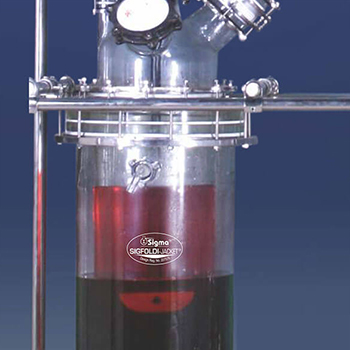
A borosilicate glass reactor is a process vessel designed for controlled chemical reactions, mixing, heating, cooling, and observation.
Borosilicate glass is widely used in laboratory and industrial processing because it offers good chemical resistance and a relatively low coefficient of thermal expansion compared with ordinary glass. That makes it suitable for processes where temperature changes and chemical exposure are part of everyday operation.
The other practical advantage is visibility.
With a transparent reactor system, operators can observe the process rather than relying entirely on instruments to understand what is happening inside the vessel. For development work, pilot operations, and many chemical processes, that visibility can be extremely useful.
Why Is Borosilicate Glass Used for Chemical and Pharma Processes?
Not every reaction calls for the same equipment.
Some processes involve aggressive chemicals. Others require controlled heating and cooling. Pharmaceutical and research applications may also place greater emphasis on cleanliness, process observation, and repeatability.
Borosilicate glass can be a suitable material where chemical compatibility, thermal behaviour, and visual monitoring are important.
It is particularly useful in applications where engineers need to see the reaction while maintaining controlled process conditions.
The important point, though, is that the material itself is only part of the equation.
The quality of the fabrication matters just as much.
What Should You Consider Before Choosing a Glass Reactor?
1. Start With the Actual Process, Not Just the Reactor Capacity
Capacity is important, but it should not be the first and only specification you provide to a manufacturer.
A proper discussion should include the type of reaction, working volume, operating temperature, pressure conditions, chemical exposure, agitation requirements, and whether heating or cooling is required.
A 100-litre reactor for one process may have very different requirements from a 100-litre reactor used for another.
This is why experienced manufacturers usually ask questions before recommending a configuration.
2. Consider Temperature Changes, Not Just Maximum Temperature
A common mistake is to look only at the highest operating temperature.
In real processing, the rate of temperature change can matter just as much.
Heating a system gradually is one situation. Moving quickly between heating and cooling conditions is another. Repeated thermal cycling can place stress on glass, particularly where there are variations in thickness, joints, or fabricated sections.
A well-made reactor therefore depends on more than selecting the right glass. Proper fabrication and controlled processing are important parts of the finished system.
3. Think About Chemical Compatibility
The process chemistry should always be discussed with the manufacturer before finalizing the reactor.
Different chemicals, solvents, concentrations, and temperatures can create different material requirements.
For a chemical plant, this may be one of the most important selection criteria.
A good glass reactor manufacturer should be able to discuss the intended application rather than treating every order as a standard product.
4. Decide Whether You Need a Jacketed Reactor
Temperature control is often a major part of the reaction.
A jacketed glass reactor allows a heating or cooling medium to circulate around the process vessel, helping control the reaction temperature.
This can be useful when a process needs controlled heating, cooling after a reaction, or tighter temperature management during operation.
The jacket configuration should be selected around the process rather than simply added as an accessory.
Laboratory, Pilot and Industrial Glass Reactors
A reactor used for research and development does not necessarily need the same configuration as one used in pilot production.
Laboratory Glass Reactor
Laboratory systems are generally used for smaller quantities, process development, experimentation, and reaction studies.
Flexibility is often important because researchers may change the process, chemistry, or operating conditions as they learn.
Pilot-Scale Glass Reactor
Pilot systems sit between laboratory development and production.
Here, the equipment needs to provide a useful representation of larger-scale processing while still allowing engineers to make adjustments.
Industrial Glass Reactor
Industrial systems are designed around a defined process and operating environment.
Capacity, structural arrangement, agitation, temperature control, connections, and integration with other process equipment become increasingly important.
The right choice depends on where the reactor sits in the production cycle.
Why Customization Matters in Glass Reactor Systems
Standard equipment can be a good starting point, but industrial processes are rarely identical.
One plant may need a particular nozzle arrangement. Another may require a specific connection, agitator configuration, sight glass arrangement, or integration with downstream equipment.
This is where a borosilicate glass reactor manufacturer with fabrication experience can be more useful than a supplier offering only standard configurations.
Customization is not about making something complicated for the sake of it.
It is about making the equipment fit the process.
Common Applications of Borosilicate Glass Reactors
Borosilicate glass reactors are used across a range of chemical and pharmaceutical applications, depending on process requirements.
These can include:
- Pharmaceutical and API development
- Specialty chemical processing
- Research and development
- Pilot plant operations
- Solvent-based reactions
- Controlled synthesis
- Process development and scale-up studies
The exact reactor configuration should always be selected based on the intended process conditions.
What Can Go Wrong With the Wrong Reactor?
The problems are not always dramatic at first.
Sometimes it starts with an alignment issue.
Sometimes a joint does not perform as expected.
Sometimes temperature control is inconsistent.
And occasionally, a component may not suit the actual operating conditions even though the specification looked acceptable when the purchase was made.
These are the kinds of problems that become expensive because they appear after installation.
Changing a reactor configuration at that stage is very different from getting the requirements right at the beginning.
What to Ask a Borosilicate Glass Reactor Manufacturer
Before placing an order, it is worth discussing a few practical points:
- What glass material and specification is being used?
- What operating temperature and pressure conditions can the system accommodate?
- How will heating and cooling be handled?
- What customization options are available?
- How are joints and fabricated sections handled?
- Can the reactor be integrated with existing process equipment?
- What inspection and quality checks are carried out before dispatch?
- What technical support is available during installation?
The answers will tell you much more than a product brochure.
Why the Manufacturer Matters as Much as the Reactor
A glass reactor is only as dependable as the engineering and fabrication behind it.
Swastik Industries works with industrial borosilicate glass 3.3 and process apparatus for plant processing and chemical industries, with an emphasis on customized equipment and components based on customer requirements.
That approach is particularly relevant when the requirement is not simply “one reactor,” but a system that needs to fit a particular process.
The useful conversation usually starts before fabrication.
What are you processing? At what temperature? What chemicals are involved? What kind of agitation is required? How does the reactor connect with the rest of the plant?
Those details help determine whether a standard configuration is enough or whether a custom solution makes more sense.
Final Thoughts
Choosing a borosilicate glass reactor is really a process decision.
Capacity matters. Price matters. Delivery matters.
But so do material compatibility, temperature control, fabrication quality, customization, and the manufacturer’s understanding of the application.
The right reactor should fit the process rather than forcing the process to fit the reactor.
And when the equipment is going to be running for years, that difference becomes easier to appreciate.
If you’re evaluating a glass reactor for a chemical, pharmaceutical, pilot, or R&D application, it is worth discussing the operating requirements with the manufacturer before finalizing the specification.